


RFID LABEL INTEGRATION


Implementing RFID label technology in your facility is a strategic process that can significantly improve inventory accuracy, operational efficiency, and supply chain visibility. While implementation requires planning and investment, many companies realize a strong return on investment (ROI) through labor savings, reduced errors, and increased productivity.
Step 1: Identify Business Objectives
Before implementing RFID, your facility should determine what challenges you want to solve.
Common goals include:
-
Improving inventory accuracy
-
Reducing manual scanning labor
-
Increasing shipping accuracy
-
Eliminating lost or misplaced inventory
-
Automating receiving and shipping processes
-
Gaining real-time inventory visibility
-
Improving asset tracking
Clearly defining objectives helps determine the scope and expected ROI of the project.

Step 2: Analyze Current Processes
Review existing workflows to identify where RFID can provide the greatest value.
Evaluate:
-
Receiving operations
-
Put-away processes
-
Inventory counting procedures
-
Picking and packing workflows
-
Shipping verification
-
Asset movement tracking
-
Returns processing
This assessment identifies bottlenecks, manual processes, and error-prone activities.
Step 3: Select the Appropriate RFID Labels and Hardware
Choose RFID labels based on:
-
Product material (metal, liquids, cardboard, plastic)
-
Environmental conditions
-
Label size requirements
-
Read range requirements
-
Industry regulations
Facilities will typically require:
RFID Thermal Transfer Labels
Printed and encoded with product information and unique EPC numbers.
RFID Printers/Encoders
Examples include Zebra RFID printers that print human-readable information while simultaneously encoding RFID data.
RFID Readers
-
Fixed readers at dock doors and portals
-
Handheld RFID readers
-
Conveyor-mounted readers
-
Forklift-mounted readers
Antennas
Installed throughout the facility to capture tag reads automatically.

Step 4: Conduct a Pilot Program
Start small.
Pilot RFID in one area such as:
-
One warehouse zone
-
One distribution line
-
One product category
-
One shipping dock
Measure:
-
Read rates
-
Labor savings
-
Inventory accuracy improvements
-
Error reduction
-
User adoption
Pilot testing minimizes risk and helps refine system settings before full deployment.

Step 5: Integrate RFID with Existing Systems
Integrate RFID data with:
-
Warehouse Management Systems (WMS)
-
Enterprise Resource Planning (ERP) systems
-
Inventory Management Systems
-
Transportation Management Systems (TMS)
Integration enables real-time visibility and automated business processes.
Examples:
-
Automatic inventory updates
-
Automated shipment verification
-
Real-time location tracking
-
Automated replenishment triggers

Step 6: Train Employees
Employees should understand:
-
How RFID works
-
Proper label placement
-
Equipment operation
-
New workflow procedures
-
Troubleshooting processes
Training ensures smooth adoption and maximizes performance.

Step 7: Roll Out Across the Facility
After successful pilot testing:
-
Expand to additional warehouse zones.
-
Add more product categories.
-
Install additional readers and antennas.
-
Continuously monitor performance metrics.
Most facilities implement RFID in phases to reduce disruption.

Why RFID Is Cost Effective
Although RFID requires an upfront investment, the long-term savings often outweigh implementation costs.
1. Reduced Labor Costs
Traditional barcode systems require employees to manually scan each item individually.
RFID enables:
-
Bulk reading of hundreds of items simultaneously
-
Faster receiving and shipping
-
Automated inventory counts
Many facilities reduce labor hours dedicated to inventory management by 50% or more.
2. Improved Inventory Accuracy
Manual processes often produce inventory accuracy rates between 85–95%.
RFID systems frequently achieve inventory accuracy rates exceeding 99%.
Greater accuracy leads to:
-
Fewer stockouts
-
Reduced safety stock
-
Lower carrying costs
-
Improved customer satisfaction

3. Fewer Shipping Errors
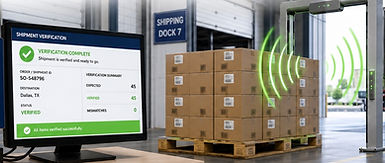
RFID automatically verifies shipments before they leave the dock.
Benefits include:
-
Reduced mis-shipments
-
Lower chargebacks
-
Fewer returns
-
Increased customer confidence

4. Real-Time Visibility
Facilities gain immediate visibility into:
-
Inventory location
-
Inventory movement
-
Work-in-process
-
Asset utilization
This visibility enables better operational decisions and faster issue resolution.

5. Reduced Lost or Misplaced Inventory
Organizations can quickly locate inventory, pallets, containers, and assets.
This reduces:
-
Search time
-
Replacement costs
-
Production delays
6. Scalability
Once infrastructure is installed, facilities can expand RFID usage across additional products, locations, and processes with relatively low incremental cost.
