

Considering RFID for your operation?

Barcode vs. RFID: Which Tracking Technology Is Right for Your Business?
Barcode or RFID? Understanding the Differences
For decades, barcodes have been the standard for product identification and inventory tracking. Today, RFID (Radio Frequency Identification) is helping businesses automate operations, improve inventory accuracy, and gain real-time visibility throughout the supply chain.
While both technologies identify products, they do so in very different ways. Understanding their strengths and limitations can help you choose the right solution for your warehouse, distribution center, manufacturing facility, or retail operation.

What Is a Barcode?
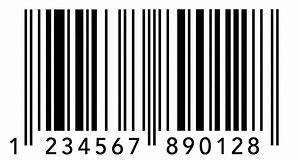
A barcode is a printed label that stores information in a pattern of lines or squares. A barcode scanner uses light to read the code and retrieve information from a database.
Because barcodes rely on optical scanning, each label must be visible and scanned individually.
Barcode Advantages
-
Low implementation cost
-
Easy to print and replace
-
Widely used across industries
-
Compatible with most inventory systems
-
Reliable for basic product identification
Barcode Limitations
-
Requires direct line of sight
-
One item scanned at a time
-
Manual scanning required
-
Damaged labels may not scan
-
Limited data storage
-
Slower inventory counts
What Is RFID?
RFID (Radio Frequency Identification) uses a small microchip and antenna embedded inside a label to store digital information. Instead of relying on light, RFID communicates using radio waves.
An RFID reader transmits a signal that powers the tag (for passive RFID) and retrieves its data, even when the label isn't directly visible.
This allows businesses to identify, track, and manage products automatically.
RFID Advantages
-
No line-of-sight required
-
Reads multiple tags simultaneously
-
Faster inventory counts
-
Improved inventory accuracy
-
Real-time product visibility
-
Automated data collection
-
Reduced manual labor
-
Better traceability throughout the supply chain
RFID Considerations
-
Higher initial investment
-
Requires RFID readers and compatible printers
-
System planning is important for optimal performance


How Inventory Counts Differ
Barcode
Employees must locate every barcode individually and scan each item one at a time.
Large inventory counts may take several hours or even days.
RFID
RFID readers can identify hundreds of items in seconds, even if products are inside sealed cartons or stacked on pallets.
This dramatically reduces counting time while improving inventory accuracy.
Which Technology Is Faster?
When speed matters, RFID offers significant advantages.
Barcode Process
-
Locate item
-
Aim scanner
-
Scan barcode
-
Repeat for every product
RFID Process
-
Walk or drive through inventory
-
RFID reader automatically captures hundreds of tags simultaneously
-
Inventory updates instantly
The result is faster receiving, shipping, cycle counting, and inventory audits.

Accuracy Matters
Inventory inaccuracies can lead to:
-
Stockouts
-
Overstock
-
Shipping errors
-
Customer dissatisfaction
-
Increased labor costs
Because RFID automates data collection and reduces manual scanning, businesses often achieve significantly higher inventory accuracy compared to traditional barcode systems.

Labor Savings
Manual barcode scanning requires employees to repeatedly handle products throughout the day.
RFID automates much of this process by collecting data without individual scans, allowing employees to focus on higher-value tasks.
Organizations using RFID often experience:
-
Reduced labor hours
-
Faster workflows
-
Improved productivity
-
More efficient warehouse operations

Data Storage Capabilities
A barcode generally stores a product identifier linked to information in a database.
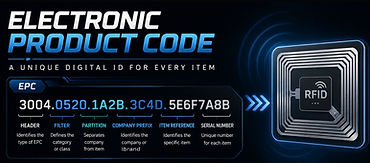
RFID tags can store additional information such as:
-
Electronic Product Code (EPC)
-
Serialized identifiers
-
Manufacturing data
-
Lot or batch numbers
-
Product details
-
User memory (depending on the RFID chip)
This added flexibility supports advanced tracking and traceability applications.
Industries That Benefit from RFID
RFID is widely used across many industries, including:
-
Warehousing
-
Distribution Centers
-
Manufacturing
-
Logistics
-
Third-Party Logistics (3PL)
-
Retail
-
Pharmaceutical Manufacturing
-
Healthcare
-
Medical Laboratories
-
Food & Beverage
-
Cold Storage
-
Apparel
-
Automotive
-
Asset Management
-
Packaging & Printing

When Is Barcode the Better Choice?
Barcode technology is ideal when:
-
Budgets are limited
-
Inventory volumes are relatively low
-
Manual scanning is acceptable
-
Basic product identification is sufficient
-
Real-time tracking isn't required
Barcodes remain a dependable and cost-effective solution for many businesses.
When Should You Choose RFID?
RFID is an excellent choice if your business needs:
-
Faster inventory counts
-
Greater inventory accuracy
-
Real-time inventory visibility
-
Automated product tracking
-
Improved warehouse efficiency
-
Reduced labor costs
-
End-to-end supply chain traceability
-
Scalable inventory management
For organizations handling thousands of products every day, RFID can deliver measurable operational improvements.
Can Barcode and RFID Be Used Together?
Yes.
Many businesses use hybrid labels that combine:
-
A printed barcode
-
Human-readable text
-
An embedded RFID chip
This allows employees and customers to continue using barcode scanners while simultaneously benefiting from RFID-enabled automation.
Hybrid labels provide an easy path for organizations transitioning from barcode systems to RFID technology.
The Bottom Line
Both barcode and RFID technologies have an important place in today's supply chain.
Barcodes remain an affordable, proven solution for basic identification and inventory management. RFID, however, offers the speed, automation, and real-time visibility needed for modern, high-volume operations.
If your organization is looking to reduce manual processes, improve inventory accuracy, and gain greater control over your supply chain, RFID can provide a significant competitive advantage.
Ready to Upgrade Your Tracking Technology?
At DockitRFID, we supply high-quality RFID thermal transfer labels designed for reliable print-and-encode performance across manufacturing, warehousing, logistics, retail, and healthcare applications.
Whether you're replacing barcodes, implementing RFID for the first time, or expanding an existing RFID system, our team can help you choose the right RFID label for your application.
Smarter Tracking Starts with the Right RFID Label.


