


RFID Buyer's Guide: Everything You Need to Know Before Choosing RFID Labels
Introduction
Implementing RFID technology can transform the way businesses manage inventory, track assets, and improve supply chain visibility. However, choosing the right RFID labels isn't simply about selecting a size or price point. The right RFID solution depends on your products, environment, equipment, and business goals.
This guide will help you understand the key factors to consider before purchasing RFID thermal transfer labels so you can make an informed decision.
What Is an RFID Label?
An RFID (Radio Frequency Identification) label is a smart label that combines a printable thermal transfer label with an embedded RFID inlay containing a microchip and antenna.
Unlike traditional barcodes, RFID labels can be read wirelessly without requiring direct line-of-sight, allowing businesses to identify and track multiple items simultaneously.
A typical RFID label consists of:
-
Printable label face stock
-
RFID chip
-
RFID antenna
-
Adhesive
-
Release liner
When paired with an RFID printer and reader, these labels enable automated identification throughout the supply chain.


Benefits of RFID Labels
Organizations across manufacturing, warehousing, logistics, retail, and healthcare are adopting RFID because it offers significant operational advantages.
Common benefits include:
-
Faster inventory counts
-
Improved inventory accuracy
-
Real-time product visibility
-
Reduced manual labor
-
Fewer shipping errors
-
Improved order fulfillment
-
Better asset tracking
-
Enhanced traceability
-
Increased warehouse efficiency

Questions to Ask Before Buying RFID Labels
1. What Are You Tracking?
Your application determines the type of RFID label you'll need.
Examples include:
-
Shipping cartons
-
Pallets
-
Individual products
-
Medical equipment
-
Retail merchandise
-
Manufacturing work-in-progress
-
Warehouse inventory
-
Returnable containers

2. What Environment Will the Labels Be Used In?
Environmental conditions affect label performance.
Consider:
-
Heat
-
Cold storage
-
Moisture
-
Chemicals
-
UV exposure
-
Outdoor use
-
Rough handling
-
Dust
Choosing the correct label material helps ensure durability and reliable performance.

3. What Surface Will the Label Be Applied To?
RFID performance varies depending on the surface.
Common surfaces include:
-
Corrugated boxes
-
Plastic containers
-
Glass
-
Wood
-
Metal
-
Liquids
Metal and liquid products often require specialized RFID inlays designed to maintain read performance.

4. What Size Label Do You Need?
Label size impacts both printing space and RFID performance.
Consider:
-
Available application space
-
Barcode requirements
-
Human-readable text
-
Regulatory information
-
Read range requirements
The most common warehouse label size is 4" × 6", but many applications use smaller or custom sizes.

Choosing the Right RFID Inlay
The RFID inlay is the heart of every RFID label.
Different inlays are optimized for different applications.
Factors include:
-
Read distance
-
Product material
-
Reader orientation
-
Industry requirements
-
Tag density
-
Performance near metal or liquids
Selecting the appropriate inlay can dramatically improve read accuracy and system performance.

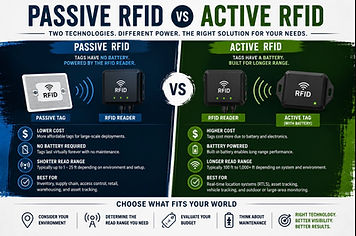
Passive vs. Active RFID
Passive RFID
-
No internal battery
-
Powered by the RFID reader
-
Lower cost
-
Most common for supply chain applications
-
Ideal for inventory tracking
Active RFID
-
Battery powered
-
Longer read ranges
-
Higher cost
-
Used for large asset tracking and specialized applications
Most warehouse and distribution operations use passive UHF RFID labels.
Selecting the Right RFID Printer
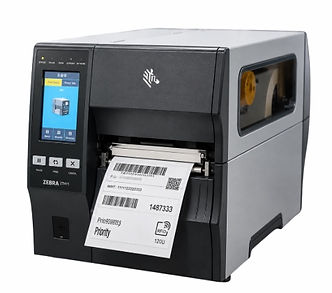
Not all thermal printers support RFID.
Choose an RFID-capable printer that can both print and encode RFID labels.
Features to consider:
-
Print-and-encode functionality
-
Encoding verification
-
Print resolution
-
Print speed
-
Media compatibility
-
Ribbon compatibility
-
Software integration
Proper printer calibration is essential for reliable encoding.
Understanding RFID Encoding
Blank RFID labels contain unprogrammed chips.
During printing, the RFID printer writes data to the chip while printing text and barcodes on the label.
Common information encoded includes:
-
EPC (Electronic Product Code)
-
Serialized numbers
-
Product identifiers
-
Internal inventory data
Accurate encoding ensures every label functions correctly throughout your supply chain.

Why Encoding Quality Matters
Poor encoding can result in:
-
Unreadable tags
-
Shipping delays
-
Inventory inaccuracies
-
Customer chargebacks
-
Compliance issues
-
Operational inefficiencies
Reliable encoding and verification help minimize these risks and improve supply chain performance.

Questions to Ask Your RFID Label Supplier
Before placing an order, ask:
-
Which RFID inlay is recommended for my application?
-
Are these labels compatible with my printer?
-
Are the labels tested for encoding quality?
-
Can you help determine the correct label size?
-
What materials are available?
-
What minimum order quantities are offered?
-
Are custom sizes available?
-
What lead times should I expect?
Working with a knowledgeable supplier can help prevent costly mistakes.

Industries That Benefit from RFID
RFID technology is widely used across many industries, including:
-
Distribution
-
Warehousing
-
Manufacturing
-
Logistics
-
Retail
-
Healthcare
-
Pharmaceutical Manufacturing
-
Food & Beverage
-
Automotive
-
Aerospace
-
Third-Party Logistics (3PL)
-
Government
-
Asset Management

Common RFID Buying Mistakes
Avoid these common errors:
-
Choosing the wrong RFID inlay
-
Purchasing labels incompatible with your printer
-
Ignoring environmental conditions
-
Focusing only on price instead of performance
-
Overlooking encoding verification
-
Selecting the wrong label material
-
Underestimating future scalability
Planning ahead can save significant time and expense.
Final Thoughts
RFID technology is more than just a label, it's a powerful tool for improving visibility, accuracy, and efficiency across your operations. Selecting the right RFID thermal transfer labels, printer, and inlay ensures your system delivers reliable performance from receiving through shipping.
Whether you're launching your first RFID project or expanding an existing deployment, investing time in selecting the right solution will help maximize your return on investment.
Ready to Find the Right RFID Labels?
DockitRFID offers factory-direct RFID thermal transfer labels designed for compatibility with leading RFID print-and-encode systems. Our team can help you identify the right label size, material, and RFID inlay for your specific application, helping you implement an RFID solution with confidence.
Explore our selection of RFID thermal transfer labels and discover how DockitRFID can support your inventory tracking and supply chain initiatives.
